

Agentic AI
From Silence to Identity: The Human Story Behind AI-Powered Voice Restoration
Ensuring Voice Technology Reaches Everyone

Mondweep Chakravorty

Designing Inclusive AI Voice Agent APIs: Why It Matters For CFOs
As a CFO, you might not think about voices every day, but you do think about risk, brand, compliance, and long term value creation. AI voice agent APIs sit right at that intersection. They shape how your customers talk to your business, how vulnerable users experience your services, and how regulators will judge your use of artificial intelligence. If your company starts using AI voice agents without thinking about inclusivity and ethics, you risk not only reputational damage, but also real financial and legal exposure that can quietly build up over time.
This topic matters for you because voice is quickly becoming a primary interface for banking, insurance, healthcare, retail, and internal operations. Inclusive AI voice agent APIs can expand your customer base, lower service costs, and protect your brand. Poorly designed ones can do the opposite, alienating people with disabilities, opening the door to fraud, and triggering regulatory scrutiny. So it is not just a technical decision, it is a strategic capital allocation choice.
The Human Story Behind Voice Technology
To understand why this is more than another IT project, it helps to look at the human story behind one of the pioneers in this space. Voice is more than sound. For most people it is identity, dignity, and emotional connection. Losing your voice often means losing a piece of who you are. That is exactly what happened to Richard, a person diagnosed with ALS, who was about to lose his ability to speak naturally.
Richard wanted to preserve his own authentic voice for his family. The existing synthetic voice solutions he tried sounded robotic and cold. This was not just a user experience issue; for him, it was about how his children and partner would remember him. His situation revealed a deep unmet need. Out of this need, entrepreneur Arsène Lavaux Santonacci and technologist Jean Marie Tassy Simeoni created SilenceSilence.ai, a company focused on restoring true human voices with AI.
For a CFO, this is an important reminder. Many AI investments look like efficiency projects on a slide deck. But the technology that really endures is usually built around a specific human problem and a clear emotional pain point. When you evaluate AI voice investments, ask your team: whose real problem are we solving, and what human story is behind this use case.
A Demonstration That Changed Perception
SilenceSilence.ai demonstrated the potential of this technology on French television, during a Good Morning Business segment on the BFM Business channel. Arsène played two audio clips. One clip was the original voice of Dr. Alexia Mattei, a medical specialist. The second clip was a version generated entirely by their AI system.
The hosts could not tell which sample was real and which was synthetic. To them, the AI voice sounded like a perfect match. It captured the tone, warmth, and personality of the original. There was no obvious robotic feel. For viewers and investors, this was a powerful proof point that AI voice technology had crossed a new threshold.
From a CFO viewpoint, this kind of fidelity is a double edged sword. On one side, it unlocks commercial opportunities. You can deliver personalised, human like service at scale, across geographies and time zones, while controlling costs. On the other side, it creates serious risks of impersonation, deep fakes, and identity abuse, some of which can lead to financial loss and regulatory challenges.
This means that when your team proposes AI voice capabilities, your questions should not stop at “does it work” or “is the ROI positive.” You also need to ask “how do we prevent misuse, and how do we prove that our voice outputs are trustworthy.”
From Text To Speech To Digital Twin Voices
Most traditional text to speech systems focus on turning written text into a generic spoken output. They may sound acceptable, but they usually lack real personality. SilenceSilence.ai followed a different path by aiming to build a digital twin of a human voice, closely reflecting the original speaker’s identity.
Their proprietary multi agent AI model breaks the task down into several specialised components. While you do not need the engineering details, it is useful to know the high level idea, because similar multi agent AI platforms will likely appear in enterprise products you will be offered.
They describe several agents working together. An Extractor Agent captures as little as ten seconds of a person’s natural past voice. Then a Cleaner Agent improves the quality of that fragment using self supervised learning so background noise does not pollute the model. A SiSiPrinter Agent then builds a deep digital fingerprint of the voice. An Impressionist Agent uses that fingerprint to restore the unique vocal identity.
Once that identity is captured, a Magnifier Agent checks fidelity and accuracy, so that the output matches the person closely. An Opera Agent adds natural emotion, rhythm, and timbre, so that the voice does not feel flat. Finally a Coach Agent orchestrates the whole process in real time, so that the system can respond quickly in live interactions.
Put simply, instead of a generic “robot voice,” you get a digital twin that sounds like a real person across many situations. For a CFO, this means any future voice investments may not only be about generic call center automation. They can involve personalised voice experiences for executives, brand spokespeople, or vulnerable clients whose voices you help restore.
Why Inclusive Design Matters For The Bottom Line
Inclusivity in AI voice agent APIs might sound like a soft concept, but it has hard financial consequences. When voice systems are not inclusive, three things usually happen. First, you lose segments of customers who either cannot use the system or find it frustrating. Second, you increase support costs, because those customers need human intervention more often. Third, you raise your legal and compliance risk, as disability and consumer protection laws increasingly cover digital interfaces.
Consider a bank that rolls out an AI voice agent to handle routine customer queries. If the system cannot properly understand people with speech impairments, older customers with tremors, or non native accents, those groups will quickly give up. They may complain publicly, or they may silently move their business to more accessible competitors. If, instead, the bank’s AI voice agent is designed and tested with these groups in mind, it can serve more people, lower waiting times, and reduce the load on human agents.
As CFO, you probably already track customer acquisition cost and lifetime value. Inclusive AI voice service can improve both. Customers who feel respected and understood are less likely to churn, even if they need extra time or support. Over a few years, that loyalty compounds into real revenue and margin impact, not just a positive story in the annual report.
Connecting Brains, Voices, And Languages
The discussion around SilenceSilence.ai’s work also explored where this technology might go next. Arsène mentioned Synchron, a company that builds brain computer interfaces. These systems aim to translate neural signals directly into digital outputs. In a future state, that could mean that someone who cannot move or speak could think their words, and have those thoughts expressed in their own restored digital voice.
Another expert, Bence Csernak, extended the idea to conversational agents and multilingual voice restoration. Imagine a scenario where a patient who lost their voice can speak in their original tone in French, but your service can automatically provide accurate versions in English, Spanish, or Arabic while preserving their identity. Or think of a senior executive who recorded only a few minutes of their voice ten years ago, and now you can recreate it for internal training in several languages.
For you as CFO, this kind of innovation opens specific strategic questions. Should you invest in AI voice infrastructure that can handle multiple languages and accents from the start, even if your immediate need is smaller. How do you value the option of later adding voice based services for new markets when doing a business case today. And how do you ensure that your data and consent models are robust enough to support such advanced use cases, so you are not forced into expensive redesigns later.
Ethics, Governance, And Financial Risk
Highly realistic AI voices can be abused. Fraudsters can impersonate a CEO, call the finance team, and request an urgent funds transfer. They can mimic a customer to access their accounts. Deep fake audio can also be used in blackmail or disinformation that damages your brand overnight. These are not theoretical risks anymore, and they have direct financial impact.
Because of this, the conversation around AI voice technology now includes ethics and governance as central topics, not side issues. Three themes are particularly important for your role. Consent frameworks, provenance protocols, and regulatory guardrails.
Consent frameworks define when and how a person’s voice can be captured, stored, and used. For example, if your company wants to create a digital twin of the voice of your founder for future campaigns, you need clear written consent that addresses duration, scope, revocation rights, and what happens if the company changes ownership. Without this, you face legal disputes and reputational backlash.
Provenance protocols refer to mechanisms that prove the origin and authenticity of audio. In practice, this might mean embedding secure watermarks or metadata into AI generated voice recordings, so that platforms and regulators can detect them as synthetic. For a CFO, this can be framed as a fraud mitigation investment. A robust provenance strategy might lower your exposure to impersonation attacks and even help with cyber insurance negotiations.
Regulatory guardrails include measures like the EU AI Act, which is especially strict for high risk systems in sectors such as finance and healthcare. Some voice technologies will fall into these categories. If your company operates in or with the EU, ignoring these rules is simply not an option. Early collaboration between finance, legal, and technology teams can avoid costly retrofits and fines.
In short, AI voice risks are manageable, but only if you treat ethics and governance as part of the core investment decision, not as a late stage compliance check. Your sponsorship as CFO carries weight in steering the organisation toward responsible choices.
What CFOs Need To Know And Do In Practice
Now let us translate all this into concrete steps. You do not need to become a machine learning expert, but you should be able to ask sharp questions and sponsor the right structures. The following points outline what you need to understand and the actions you can take, often in partnership with your CTO, CISO, and legal counsel.
1. Map Your Current And Future Voice Use Cases
Start with a clear inventory. Where is your organisation already using voice, and where is it likely to use AI voice agents soon. Typical areas include customer service hotlines, internal IT help desks, outbound sales calls, appointment reminders, and accessibility support for employees.
For example, suppose your company runs a national customer contact center that handles 1 million calls per year. Your operations team wants to deploy AI voice agents to handle basic queries before transferring to humans. As CFO, you should ask for a simple map: what type of calls will be handled by the AI, which customer segments will be most affected, and what accessibility needs those segments may have.
This map allows you to flag high impact areas. Calls from elderly clients, patients, or financially vulnerable people deserve more careful design and testing. This is where inclusive AI voice agent APIs are not just nice to have, but essential for trust and regulatory protection.
2. Define Inclusion And Accessibility Requirements Upfront
Many AI projects get into trouble because inclusion is treated as an afterthought. Teams build for the “average” user, then later discover that the system fails for people with speech differences, strong accents, or hearing challenges. Fixing these problems late often costs more than building them in from day one.
Insist that every voice related project includes explicit inclusion requirements in its business case. Examples include support for multiple languages and dialects, adjustable speaking speed, clear audio quality on low end devices, and ability to integrate with assistive technologies like screen readers or captioning systems.
Let us take a simple example. A regional utility company wants to launch an AI voice bot to handle billing enquiries. You can ask for a small pilot where the bot is tested with customers who have speech impairments and with people over 70. If early results show significant misunderstanding rates, the team must either improve the model or adjust the use case. That way, you avoid rolling out a system that quietly excludes a large part of your customer base, and then having to fix it later at higher cost.
3. Build A Consent And Voice Rights Policy
Because voice is closely tied to identity, you should treat it like a sensitive asset, similar to biometric data. Ask your legal and privacy teams to create a simple, clear policy for how your organisation collects, stores, and uses voice data. This is especially important if you ever consider creating digital twins of specific people’s voices, such as executives, doctors, or spokespeople.
For instance, say your marketing team proposes using an AI replica of your CEO’s voice for investor calls when they are traveling. Before approving budget, request a written agreement that covers ownership of the voice model, usage boundaries, and what happens if the CEO leaves the company. Also ensure that any vendor involved follows strict security standards and cannot repurpose that voice model for other clients.
Without this kind of policy, small creative experiments can later grow into legal and ethical headaches, especially if the individuals involved did not fully understand the implications at the start.
4. Invest In Provenance And Fraud Defenses
Realistic voice cloning raises the risk of fraud. Deep fake calls impersonating executives or clients are already happening in the wild. As CFO, you sit close to the processes that move money, so your input is vital in redesigning controls that assume voices are no longer trusted by default.
Work with your CISO and treasury team to strengthen verification steps for high value transactions. For example, you might require written confirmation through secure channels for any urgent transfer request, regardless of who calls. You can also explore technologies that detect synthetic audio or that embed secure watermarks in your own outbound AI generated calls.
One practical step is to run a tabletop exercise. Simulate a scenario where someone uses an AI clone of your CEO’s voice to demand an urgent multimillion currency transfer. Ask your finance and operations teams how they would respond today. If the answer relies heavily on trusting the sound of the voice, you know you need to update your controls and training.
5. Align With Emerging Regulation Early
Regulation around AI, including AI voice systems, is tightening. The EU AI Act is a prominent example, but similar rules are emerging in other regions. While the legal details can be complex, your role is to ensure that AI projects with significant voice components are treated as potentially regulated from the start.
Ask your legal team to create a simple checklist for AI projects: data categories, risk level, need for human oversight, documentation requirements, and transparency obligations. Then require that any major AI voice investment includes this checklist in the project approval pack.
If you operate in multiple jurisdictions, it is wise to design for the strictest relevant standard instead of playing catch up country by country. It may feel a bit heavier early on, but it usually saves money and stress later, especially when auditors or regulators start asking questions.
6. Measure The Business Impact Of Inclusivity
Inclusive AI often gets treated as a compliance duty only, which makes it easy to underinvest when budgets are tight. To change this, you can ask for clear metrics that tie inclusivity to core financial outcomes. For AI voice agents, these might include completion rate of self service calls for different customer groups, satisfaction scores for people using accessibility features, or reduction in complaints related to digital services.
Suppose your call center data shows that customers over 65 abandon the AI voice menu twice as often as younger customers and usually end up with a live agent. After improving the inclusivity of your voice API, you see a 30 percent improvement in self service completion for that group. That translates into fewer agent minutes, shorter queues, and potentially higher satisfaction scores. When these numbers enter your financial dashboards, it becomes much easier to justify ongoing investment in inclusive design.
Agentics Conversations And Collaborative Governance
The ideas described here were part of a broader discussion in an Agentics Foundation webinar series. The Agentics Foundation is developing communities in London, France, and beyond, focused on agentic AI for both societal and business transformation. The underlying belief is that technology planning should start with real human needs, like Richard’s desire to preserve his voice, rather than with abstract hype about artificial intelligence.
For CFOs, this community driven approach has a direct parallel. When you participate in cross functional and cross industry discussions around AI voice governance, you gain early visibility into emerging norms. You can benchmark your company’s practices not just against regulations, but against what thoughtful peers are doing. This often leads to better investment decisions and fewer unpleasant surprises.
If your organisation aligns with AI for Good initiatives, collaborations with groups like the Agentics Foundation can also support your ESG narrative. Sponsors and partners are increasingly expected to show not just that they use AI efficiently, but that they use it in ways that protect dignity, identity, and social cohesion.
Concrete CFO Examples: Bringing It All Together
To make this more tangible, let us look at a few realistic scenarios where you, as CFO, would apply these ideas directly. These examples use simple language on purpose, because the goal is clear thinking, not technical complexity.
First example. A mid sized retail bank wants to deploy an AI voice agent to handle balance checks, lost card reports, and loan repayment queries. The technology team estimates that it will reduce call center costs by 25 percent. Before signing off on the budget, you ask three things. You want an analysis of how the system will support elderly clients and those with speech difficulties. You request a plan for consent and data retention for recorded voices. And you insist on updated fraud controls and training, since voice based impersonation risk will increase. The final project still saves money, but it also reduces the risk of excluding vulnerable customers or suffering a voice related fraud incident.
Second example. A healthcare provider plans to use AI to give certain patients their voice back, similar to what SilenceSilence.ai does. There is strong emotional value, but also clear operational benefits, since patients who can speak again can self manage better and reduce clinical workload. As CFO, you work with the medical and ethics boards to set strict consent rules, so that voice models are not reused casually. You also explore reimbursement options or grants, because this kind of AI for Good project can sometimes attract external funding that offsets your upfront spend.
Third example. Your company’s marketing team wants to experiment with a digital twin of your popular brand spokesperson’s voice for global campaigns. The cost is modest, but the risk is non trivial. You ask for a clear voice rights agreement, technical watermarks on all synthetic ads, and a review from your legal and brand protection teams. It slows the project a little, but you avoid the scenario where the voice is later used in a way the person did not approve, which could lead to costly disputes or public backlash.
In every example, your role is not to block innovation, but to ensure the foundations are solid. You keep an eye on long term value, risk, and alignment with your company’s purpose, not just the short term ROI slide.
Simple Summary For Busy CFOs
Inclusive AI voice agent APIs are no longer a niche topic. They sit at the crossroads of customer experience, risk management, brand identity, and regulation. Human stories like Richard’s remind us that voice technology is really about dignity and connection, not gadgetry. Companies like SilenceSilence.ai show what is now technically possible with digital twin voices. At the same time, the rise of deep fakes and strict AI laws means that governance and ethics are essential, not optional.
If you remember only a few things, keep these in mind. First, treat AI voice projects as strategic investments that affect how people experience your company, especially vulnerable customers. Second, build consent, inclusion, and fraud safeguards into the design from the start, they are cheaper that way and protect real value. Third, work closely with technology, legal, and risk teams to align with emerging rules such as the EU AI Act, and track measurable benefits from inclusive design, not just cost savings.
Think of yourself as a mentor to your own organisation in this space. You do not have to know every technical detail, but your questions and priorities set the tone. When you push for AI voice agents that are inclusive, trustworthy, and well governed, you are not only avoiding downside. You are opening up new, sustainable ways for your business to connect with people, in a voice that they can trust and recognise as genuinely human.
Designing Inclusive AI Voice Agent APIs: Why It Matters For CFOs
As a CFO, you might not think about voices every day, but you do think about risk, brand, compliance, and long term value creation. AI voice agent APIs sit right at that intersection. They shape how your customers talk to your business, how vulnerable users experience your services, and how regulators will judge your use of artificial intelligence. If your company starts using AI voice agents without thinking about inclusivity and ethics, you risk not only reputational damage, but also real financial and legal exposure that can quietly build up over time.
This topic matters for you because voice is quickly becoming a primary interface for banking, insurance, healthcare, retail, and internal operations. Inclusive AI voice agent APIs can expand your customer base, lower service costs, and protect your brand. Poorly designed ones can do the opposite, alienating people with disabilities, opening the door to fraud, and triggering regulatory scrutiny. So it is not just a technical decision, it is a strategic capital allocation choice.
The Human Story Behind Voice Technology
To understand why this is more than another IT project, it helps to look at the human story behind one of the pioneers in this space. Voice is more than sound. For most people it is identity, dignity, and emotional connection. Losing your voice often means losing a piece of who you are. That is exactly what happened to Richard, a person diagnosed with ALS, who was about to lose his ability to speak naturally.
Richard wanted to preserve his own authentic voice for his family. The existing synthetic voice solutions he tried sounded robotic and cold. This was not just a user experience issue; for him, it was about how his children and partner would remember him. His situation revealed a deep unmet need. Out of this need, entrepreneur Arsène Lavaux Santonacci and technologist Jean Marie Tassy Simeoni created SilenceSilence.ai, a company focused on restoring true human voices with AI.
For a CFO, this is an important reminder. Many AI investments look like efficiency projects on a slide deck. But the technology that really endures is usually built around a specific human problem and a clear emotional pain point. When you evaluate AI voice investments, ask your team: whose real problem are we solving, and what human story is behind this use case.
A Demonstration That Changed Perception
SilenceSilence.ai demonstrated the potential of this technology on French television, during a Good Morning Business segment on the BFM Business channel. Arsène played two audio clips. One clip was the original voice of Dr. Alexia Mattei, a medical specialist. The second clip was a version generated entirely by their AI system.
The hosts could not tell which sample was real and which was synthetic. To them, the AI voice sounded like a perfect match. It captured the tone, warmth, and personality of the original. There was no obvious robotic feel. For viewers and investors, this was a powerful proof point that AI voice technology had crossed a new threshold.
From a CFO viewpoint, this kind of fidelity is a double edged sword. On one side, it unlocks commercial opportunities. You can deliver personalised, human like service at scale, across geographies and time zones, while controlling costs. On the other side, it creates serious risks of impersonation, deep fakes, and identity abuse, some of which can lead to financial loss and regulatory challenges.
This means that when your team proposes AI voice capabilities, your questions should not stop at “does it work” or “is the ROI positive.” You also need to ask “how do we prevent misuse, and how do we prove that our voice outputs are trustworthy.”
From Text To Speech To Digital Twin Voices
Most traditional text to speech systems focus on turning written text into a generic spoken output. They may sound acceptable, but they usually lack real personality. SilenceSilence.ai followed a different path by aiming to build a digital twin of a human voice, closely reflecting the original speaker’s identity.
Their proprietary multi agent AI model breaks the task down into several specialised components. While you do not need the engineering details, it is useful to know the high level idea, because similar multi agent AI platforms will likely appear in enterprise products you will be offered.
They describe several agents working together. An Extractor Agent captures as little as ten seconds of a person’s natural past voice. Then a Cleaner Agent improves the quality of that fragment using self supervised learning so background noise does not pollute the model. A SiSiPrinter Agent then builds a deep digital fingerprint of the voice. An Impressionist Agent uses that fingerprint to restore the unique vocal identity.
Once that identity is captured, a Magnifier Agent checks fidelity and accuracy, so that the output matches the person closely. An Opera Agent adds natural emotion, rhythm, and timbre, so that the voice does not feel flat. Finally a Coach Agent orchestrates the whole process in real time, so that the system can respond quickly in live interactions.
Put simply, instead of a generic “robot voice,” you get a digital twin that sounds like a real person across many situations. For a CFO, this means any future voice investments may not only be about generic call center automation. They can involve personalised voice experiences for executives, brand spokespeople, or vulnerable clients whose voices you help restore.
Why Inclusive Design Matters For The Bottom Line
Inclusivity in AI voice agent APIs might sound like a soft concept, but it has hard financial consequences. When voice systems are not inclusive, three things usually happen. First, you lose segments of customers who either cannot use the system or find it frustrating. Second, you increase support costs, because those customers need human intervention more often. Third, you raise your legal and compliance risk, as disability and consumer protection laws increasingly cover digital interfaces.
Consider a bank that rolls out an AI voice agent to handle routine customer queries. If the system cannot properly understand people with speech impairments, older customers with tremors, or non native accents, those groups will quickly give up. They may complain publicly, or they may silently move their business to more accessible competitors. If, instead, the bank’s AI voice agent is designed and tested with these groups in mind, it can serve more people, lower waiting times, and reduce the load on human agents.
As CFO, you probably already track customer acquisition cost and lifetime value. Inclusive AI voice service can improve both. Customers who feel respected and understood are less likely to churn, even if they need extra time or support. Over a few years, that loyalty compounds into real revenue and margin impact, not just a positive story in the annual report.
Connecting Brains, Voices, And Languages
The discussion around SilenceSilence.ai’s work also explored where this technology might go next. Arsène mentioned Synchron, a company that builds brain computer interfaces. These systems aim to translate neural signals directly into digital outputs. In a future state, that could mean that someone who cannot move or speak could think their words, and have those thoughts expressed in their own restored digital voice.
Another expert, Bence Csernak, extended the idea to conversational agents and multilingual voice restoration. Imagine a scenario where a patient who lost their voice can speak in their original tone in French, but your service can automatically provide accurate versions in English, Spanish, or Arabic while preserving their identity. Or think of a senior executive who recorded only a few minutes of their voice ten years ago, and now you can recreate it for internal training in several languages.
For you as CFO, this kind of innovation opens specific strategic questions. Should you invest in AI voice infrastructure that can handle multiple languages and accents from the start, even if your immediate need is smaller. How do you value the option of later adding voice based services for new markets when doing a business case today. And how do you ensure that your data and consent models are robust enough to support such advanced use cases, so you are not forced into expensive redesigns later.
Ethics, Governance, And Financial Risk
Highly realistic AI voices can be abused. Fraudsters can impersonate a CEO, call the finance team, and request an urgent funds transfer. They can mimic a customer to access their accounts. Deep fake audio can also be used in blackmail or disinformation that damages your brand overnight. These are not theoretical risks anymore, and they have direct financial impact.
Because of this, the conversation around AI voice technology now includes ethics and governance as central topics, not side issues. Three themes are particularly important for your role. Consent frameworks, provenance protocols, and regulatory guardrails.
Consent frameworks define when and how a person’s voice can be captured, stored, and used. For example, if your company wants to create a digital twin of the voice of your founder for future campaigns, you need clear written consent that addresses duration, scope, revocation rights, and what happens if the company changes ownership. Without this, you face legal disputes and reputational backlash.
Provenance protocols refer to mechanisms that prove the origin and authenticity of audio. In practice, this might mean embedding secure watermarks or metadata into AI generated voice recordings, so that platforms and regulators can detect them as synthetic. For a CFO, this can be framed as a fraud mitigation investment. A robust provenance strategy might lower your exposure to impersonation attacks and even help with cyber insurance negotiations.
Regulatory guardrails include measures like the EU AI Act, which is especially strict for high risk systems in sectors such as finance and healthcare. Some voice technologies will fall into these categories. If your company operates in or with the EU, ignoring these rules is simply not an option. Early collaboration between finance, legal, and technology teams can avoid costly retrofits and fines.
In short, AI voice risks are manageable, but only if you treat ethics and governance as part of the core investment decision, not as a late stage compliance check. Your sponsorship as CFO carries weight in steering the organisation toward responsible choices.
What CFOs Need To Know And Do In Practice
Now let us translate all this into concrete steps. You do not need to become a machine learning expert, but you should be able to ask sharp questions and sponsor the right structures. The following points outline what you need to understand and the actions you can take, often in partnership with your CTO, CISO, and legal counsel.
1. Map Your Current And Future Voice Use Cases
Start with a clear inventory. Where is your organisation already using voice, and where is it likely to use AI voice agents soon. Typical areas include customer service hotlines, internal IT help desks, outbound sales calls, appointment reminders, and accessibility support for employees.
For example, suppose your company runs a national customer contact center that handles 1 million calls per year. Your operations team wants to deploy AI voice agents to handle basic queries before transferring to humans. As CFO, you should ask for a simple map: what type of calls will be handled by the AI, which customer segments will be most affected, and what accessibility needs those segments may have.
This map allows you to flag high impact areas. Calls from elderly clients, patients, or financially vulnerable people deserve more careful design and testing. This is where inclusive AI voice agent APIs are not just nice to have, but essential for trust and regulatory protection.
2. Define Inclusion And Accessibility Requirements Upfront
Many AI projects get into trouble because inclusion is treated as an afterthought. Teams build for the “average” user, then later discover that the system fails for people with speech differences, strong accents, or hearing challenges. Fixing these problems late often costs more than building them in from day one.
Insist that every voice related project includes explicit inclusion requirements in its business case. Examples include support for multiple languages and dialects, adjustable speaking speed, clear audio quality on low end devices, and ability to integrate with assistive technologies like screen readers or captioning systems.
Let us take a simple example. A regional utility company wants to launch an AI voice bot to handle billing enquiries. You can ask for a small pilot where the bot is tested with customers who have speech impairments and with people over 70. If early results show significant misunderstanding rates, the team must either improve the model or adjust the use case. That way, you avoid rolling out a system that quietly excludes a large part of your customer base, and then having to fix it later at higher cost.
3. Build A Consent And Voice Rights Policy
Because voice is closely tied to identity, you should treat it like a sensitive asset, similar to biometric data. Ask your legal and privacy teams to create a simple, clear policy for how your organisation collects, stores, and uses voice data. This is especially important if you ever consider creating digital twins of specific people’s voices, such as executives, doctors, or spokespeople.
For instance, say your marketing team proposes using an AI replica of your CEO’s voice for investor calls when they are traveling. Before approving budget, request a written agreement that covers ownership of the voice model, usage boundaries, and what happens if the CEO leaves the company. Also ensure that any vendor involved follows strict security standards and cannot repurpose that voice model for other clients.
Without this kind of policy, small creative experiments can later grow into legal and ethical headaches, especially if the individuals involved did not fully understand the implications at the start.
4. Invest In Provenance And Fraud Defenses
Realistic voice cloning raises the risk of fraud. Deep fake calls impersonating executives or clients are already happening in the wild. As CFO, you sit close to the processes that move money, so your input is vital in redesigning controls that assume voices are no longer trusted by default.
Work with your CISO and treasury team to strengthen verification steps for high value transactions. For example, you might require written confirmation through secure channels for any urgent transfer request, regardless of who calls. You can also explore technologies that detect synthetic audio or that embed secure watermarks in your own outbound AI generated calls.
One practical step is to run a tabletop exercise. Simulate a scenario where someone uses an AI clone of your CEO’s voice to demand an urgent multimillion currency transfer. Ask your finance and operations teams how they would respond today. If the answer relies heavily on trusting the sound of the voice, you know you need to update your controls and training.
5. Align With Emerging Regulation Early
Regulation around AI, including AI voice systems, is tightening. The EU AI Act is a prominent example, but similar rules are emerging in other regions. While the legal details can be complex, your role is to ensure that AI projects with significant voice components are treated as potentially regulated from the start.
Ask your legal team to create a simple checklist for AI projects: data categories, risk level, need for human oversight, documentation requirements, and transparency obligations. Then require that any major AI voice investment includes this checklist in the project approval pack.
If you operate in multiple jurisdictions, it is wise to design for the strictest relevant standard instead of playing catch up country by country. It may feel a bit heavier early on, but it usually saves money and stress later, especially when auditors or regulators start asking questions.
6. Measure The Business Impact Of Inclusivity
Inclusive AI often gets treated as a compliance duty only, which makes it easy to underinvest when budgets are tight. To change this, you can ask for clear metrics that tie inclusivity to core financial outcomes. For AI voice agents, these might include completion rate of self service calls for different customer groups, satisfaction scores for people using accessibility features, or reduction in complaints related to digital services.
Suppose your call center data shows that customers over 65 abandon the AI voice menu twice as often as younger customers and usually end up with a live agent. After improving the inclusivity of your voice API, you see a 30 percent improvement in self service completion for that group. That translates into fewer agent minutes, shorter queues, and potentially higher satisfaction scores. When these numbers enter your financial dashboards, it becomes much easier to justify ongoing investment in inclusive design.
Agentics Conversations And Collaborative Governance
The ideas described here were part of a broader discussion in an Agentics Foundation webinar series. The Agentics Foundation is developing communities in London, France, and beyond, focused on agentic AI for both societal and business transformation. The underlying belief is that technology planning should start with real human needs, like Richard’s desire to preserve his voice, rather than with abstract hype about artificial intelligence.
For CFOs, this community driven approach has a direct parallel. When you participate in cross functional and cross industry discussions around AI voice governance, you gain early visibility into emerging norms. You can benchmark your company’s practices not just against regulations, but against what thoughtful peers are doing. This often leads to better investment decisions and fewer unpleasant surprises.
If your organisation aligns with AI for Good initiatives, collaborations with groups like the Agentics Foundation can also support your ESG narrative. Sponsors and partners are increasingly expected to show not just that they use AI efficiently, but that they use it in ways that protect dignity, identity, and social cohesion.
Concrete CFO Examples: Bringing It All Together
To make this more tangible, let us look at a few realistic scenarios where you, as CFO, would apply these ideas directly. These examples use simple language on purpose, because the goal is clear thinking, not technical complexity.
First example. A mid sized retail bank wants to deploy an AI voice agent to handle balance checks, lost card reports, and loan repayment queries. The technology team estimates that it will reduce call center costs by 25 percent. Before signing off on the budget, you ask three things. You want an analysis of how the system will support elderly clients and those with speech difficulties. You request a plan for consent and data retention for recorded voices. And you insist on updated fraud controls and training, since voice based impersonation risk will increase. The final project still saves money, but it also reduces the risk of excluding vulnerable customers or suffering a voice related fraud incident.
Second example. A healthcare provider plans to use AI to give certain patients their voice back, similar to what SilenceSilence.ai does. There is strong emotional value, but also clear operational benefits, since patients who can speak again can self manage better and reduce clinical workload. As CFO, you work with the medical and ethics boards to set strict consent rules, so that voice models are not reused casually. You also explore reimbursement options or grants, because this kind of AI for Good project can sometimes attract external funding that offsets your upfront spend.
Third example. Your company’s marketing team wants to experiment with a digital twin of your popular brand spokesperson’s voice for global campaigns. The cost is modest, but the risk is non trivial. You ask for a clear voice rights agreement, technical watermarks on all synthetic ads, and a review from your legal and brand protection teams. It slows the project a little, but you avoid the scenario where the voice is later used in a way the person did not approve, which could lead to costly disputes or public backlash.
In every example, your role is not to block innovation, but to ensure the foundations are solid. You keep an eye on long term value, risk, and alignment with your company’s purpose, not just the short term ROI slide.
Simple Summary For Busy CFOs
Inclusive AI voice agent APIs are no longer a niche topic. They sit at the crossroads of customer experience, risk management, brand identity, and regulation. Human stories like Richard’s remind us that voice technology is really about dignity and connection, not gadgetry. Companies like SilenceSilence.ai show what is now technically possible with digital twin voices. At the same time, the rise of deep fakes and strict AI laws means that governance and ethics are essential, not optional.
If you remember only a few things, keep these in mind. First, treat AI voice projects as strategic investments that affect how people experience your company, especially vulnerable customers. Second, build consent, inclusion, and fraud safeguards into the design from the start, they are cheaper that way and protect real value. Third, work closely with technology, legal, and risk teams to align with emerging rules such as the EU AI Act, and track measurable benefits from inclusive design, not just cost savings.
Think of yourself as a mentor to your own organisation in this space. You do not have to know every technical detail, but your questions and priorities set the tone. When you push for AI voice agents that are inclusive, trustworthy, and well governed, you are not only avoiding downside. You are opening up new, sustainable ways for your business to connect with people, in a voice that they can trust and recognise as genuinely human.
finabeo articles
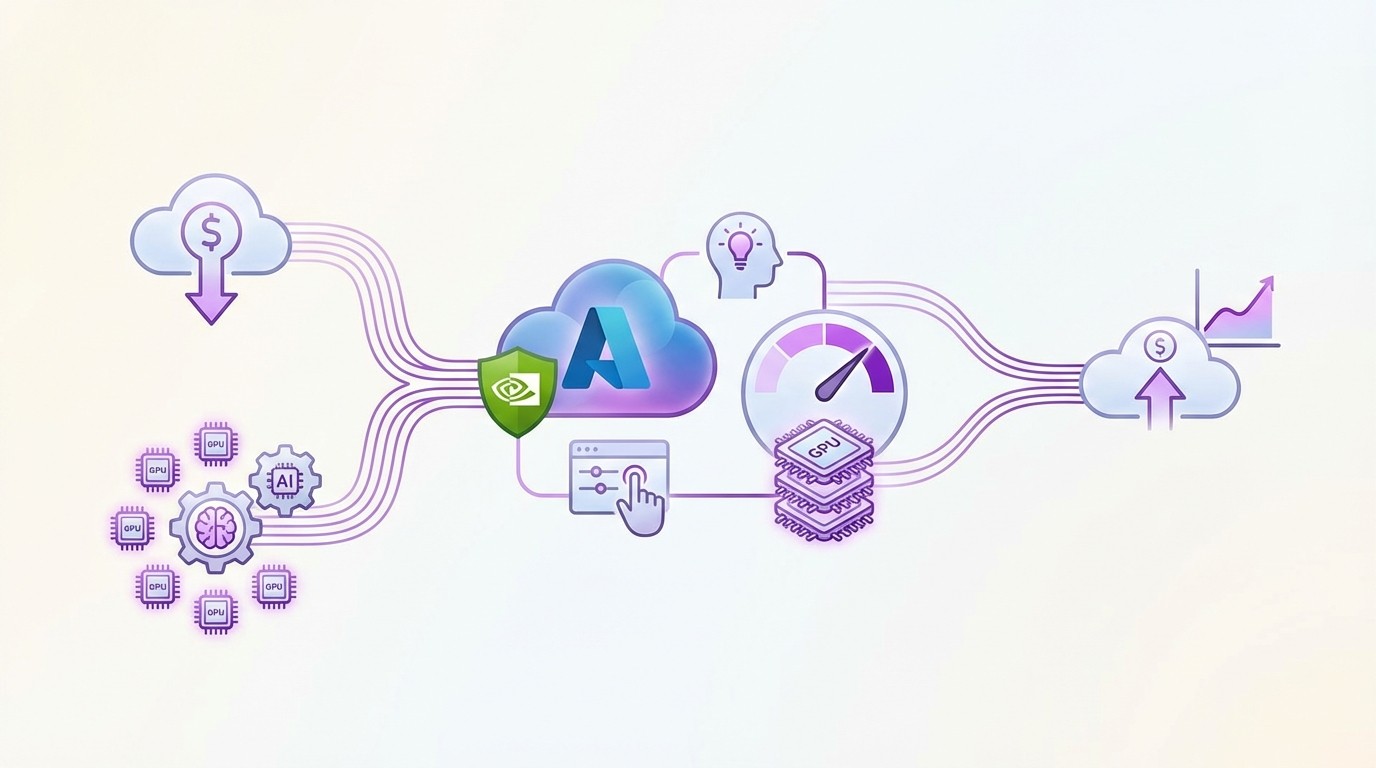
Cloud Savings & AI Transformation Insights for Enterprises
Read the latest advancements in all things enterprise cloud costs, hyperscaler news & AI digital transformations, governance and infrastructure


finabeo articles
Cloud Savings & AI Transformation Insights for Enterprises
Read the latest advancements in all things enterprise cloud costs, hyperscaler news & AI digital transformations, governance and infrastructure
finabeo articles
Cloud Savings & AI Transformation Insights for Enterprises
Read the latest advancements in all things enterprise cloud costs, hyperscaler news & AI digital transformations, governance and infrastructure
finabeo articles
Cloud Savings & AI Transformation Insights for Enterprises
Read the latest advancements in all things enterprise cloud costs, hyperscaler news & AI digital transformations, governance and infrastructure